Across the sixteen entries in theFire Emblemseries, the franchise has boasted nearly six-hundred unique, named characters. Throughout nearly each of these games, characters assume the roles of specific recurring archetypes that allow for roles in both the gameplay and narrative to be filled, even if aFire Emblemgames take place in entirely different universes and timelines.
RELATED:10 Games To Play If You Liked Fire Emblem

Many of these archetypes have supplied some of the most iconic characters in the series, and they have assisted in crafting much of the franchise’s identity across each of its entries. Though these archetypes may have changedclassesand sometimes even significance between games, the series wouldn’t be the same without them! So without further deliberation, we’re going to examine the 10 most iconic archetypes in theFire Emblemseries!
11Jagen
Named after Jagen, the elderly Paladin who served as Marth’s mentor in the very first entry of the series, Jagens have appeared in some capacity in the majority of the entries of the series.
Traditional Jagens begin the game promoted, start with above average stats, but suffer from a lack of potential to grow. Jagens are a beautiful marriage of flavor and functionality, as they utilize the game’s mechanics to perfectly showcase a veteran who is past their prime with limited space to improve.

Jagens are often the most useful in the early parts of a givenFire Emblem,and can help whittle down stronger enemies for your weaker units before they can take a kill. Our Favorite Jagens include Jagen fromFire Emblem: Shadow Dragon,and Marcus fromFire Emblem: The Binding Blade.
10Navarre
Taking their name after Navarre ofFire Emblem: Shadow Dragon and The Blade of Light, Navarre’s are skilled myrmidons with often less than pleasant demeanors, who must regularly be recruited from the ranks of the enemy.
RELATED:10 Things The Game Doesn’t Tell You About Fire Emblem: Three Houses

Navarre’s will often be seen in early chapters of a givenFire Emblemgameas an enemy unit wielding a killing edge. What Navarre’s lack in defense and mobility, they make up for in speed and skill, making them a favorite of many players. Some of our favorite Navarre’s include the faithful boss-killer, Rutger ofFire Emblem: The Binding Blade, and Zihark ofFire Emblem: Path of Radiance.
9Cain and Abel
Often referred to by fans as the “Christmas Cavaliers” due to their red and green palettes, Cain and Abel’s are reliable mainstays who have made it into nearly every entry in the series.
Named after the two cavalier’s the player has access to in the very first level of the first game in the franchise, Cain and Abels are always two units of the same class (usually cavaliers) that the player receives relatively early in a game.

While some games change up their classes such as with Saizo and Kaze inFire Emblem: Fates,Cain and Abels are notably very reliable units to use in any game they appear in. Our personal favorite Cain and Abels are the original Cain and Abel fromFire Emblem: Shadow Dragonand The Blade of Light,and Kent and Sain fromFire Emblem: The Blazing Blade.
8Est
One of the most polarizing archetypes in all ofFire Emblem,many have long debated over whether or not it is worth it to use an Est in yourFire Emblemarmy.
RELATED:Fire Emblem Three Houses: 10 Best Characters to Recruit For Endgame

Named after Est ofFire Emblem: Shadow Dragonand The Blade of Light, Ests are characters who join your army very late into the game at a very low level, but with the benefit of having very high potential. Ests are often rewarding to train, as you can watch a seemingly useless character blossom into a veritable machine of death, fully exemplifying the concept of “zero-to-hero.”
On the other hand, many argue that their late join time mitigates their usefulness in the game. Our personal favorite Ests come in the form of the young mage Nino inFire Emblem: The Blazing Blade, and Kurthnaga inFire Emblem: Radiant Dawn.

7Camus
Not all archetypes inFire Emblemare used to describe your own units, and this is truly exemplified by the recurring Camus archetype. Camus characters are specifically characters in a givenFire Emblemwhom is a noble and likable character who refuses to defect to your army.
While the vast majority ofFire Emblemcharacters with any form likable personality traits can be recruited, Camus’s are loyal to their country and refuse to join you. Camus’s are a great source of moral ambiguity, bringing a sense of reality to the wars within the game as they showcase that those whom you are fighting are not pure evil. Our favorite Camus’s are the original Camus himself, and Eldigan fromFire Emblem: Genealogy of the Holy War.

6Pegasus Sisters
Across numerousFire Emblemtimelines, it has become a very common trend for the game to feature a trio of sisters who each ride a pegasus.
RELATED:All Advanced Classes In Fire Emblem: Three Houses, Ranked
The inclusion of the Whitewings in the very firstFire Emblemkicked off this trend, and it soon became a series staple. Games likeFire Emblem:The Binding BladeandFire Emblem:The Blazing Bladewould follow suit, each also including a triumvirate of related pegasus riders. Our personal favorite trio are the original Whitewings, who outside of their first appearance, have also appeared in 2017’sFire Emblem: Echoes.
5Arran and Samson
An archetype taking its name from Arran and Samson ofFire Emblem: Shadow Dragon and the Blade of Light,Arran and Samsons are notable for providing numerous entries of the series with an additional level of replay value. The inclusion of each Arran and Samson provides a choice to the player of one unit or another based on the player’s decision making.
This means that if a player were to recruit the paladin, Arran, it would be impossible for them to recruit the hero, Samson. This incentivizes playing through the game a second time to try out the units you were unable to on a previous playthrough. Our favorite Arran and Samsons are Sonya and Deen fromFire Emblem: Echoes.

4Oifey
Named afterGenealogy of the Holy War’sOifey,this archetype serves a similar to that of Jagen’s. However, the distinction between Oifeys and the aforementioned Jagen’s is that Oifey’s, while already skilled veterans, are not past their prime and still have room to grow.
RELATED:Fire Emblem Three Houses: Best Tips for New Game Plus
This means that while they can be used in similar fashion to a Jagen in the early game, as you progress through a game with an Oifey, they won’t necessarily become outclassed by your other characters, and they can remain a staple of your roster. Some of the most notable Oifey’s include Seth ofFire Emblem: The Sacred Stones,and Frederick ofFire Emblem: Awakening.
3Beowulf
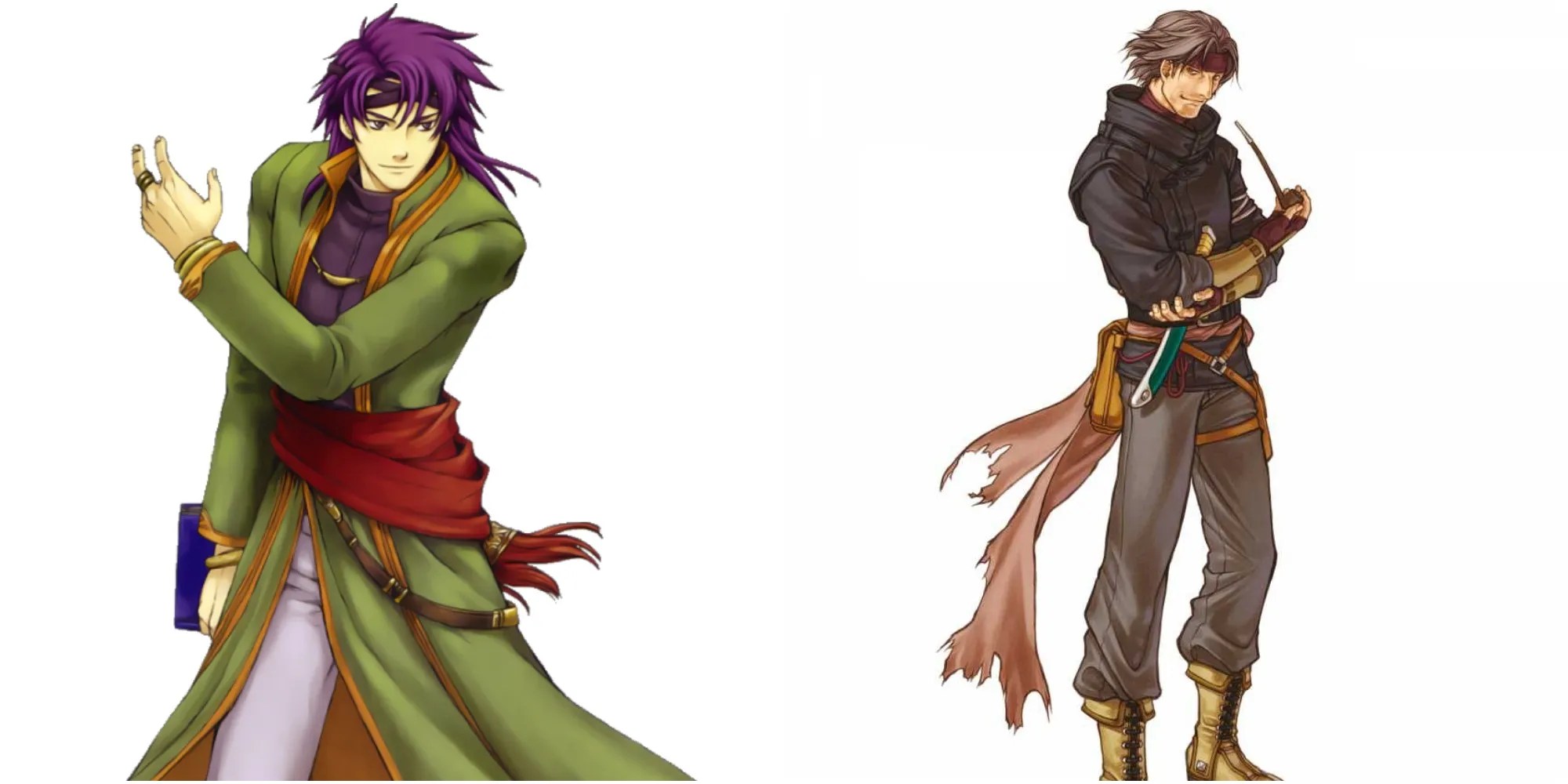
While we haven’t seen a proper Beowulf sinceFire Emblem: Radiant Dawnin 2007, their memorable and unique recruitment methods land them on this list. Named afterGenealogy of the Holy War’sBeowulf, this archetype is distinguished by its simple yet distinct method of recruitment: payment.
While most units inFire Emblemchoose to join you out of personal belief, obligation, or political reasons, Beowulfs are tried and true mercenaries whose loyalty is only to your wallet. Our personal favorite Beowulfs includeFire Emblem: The Binding Blade’sHugh, and Volke from bothFire Emblem: Path of RadianceandFire Emblem: Radiant Dawn.
2Jeorge
Named after Jeorge of the series first entry, Jeorges are distinguished not through their gameplay, but rather their standing in the plot. Nearly every entry in the series has a Jeorge in its roster, and it’s not hard to see why.
Each game’s roster of available units is quite large, with each unit having their own personality and backstory. So when you learn that one of these many individuals in your army is more important than they had initially led on, it can be quite a surprise.

Some standout Jeorges include the original Jeorge himself and Joshua fromFire Emblem: Sacred Stones.These characters optional recruitments greatly help to increase the surprise of their importance.
NEXT:Fire Emblem: Three Houses DLC: 10 Classes We Want To See
