One of the more unexpected gaming rumors to pop up this year is thatKojima Productions could be teaming up with Xbox. Neither party has confirmed this, but given Hideo Kojima’s desire for creative freedom and Xbox boss Phil Spencer’s goal of increasing Xbox’s reach in Japan, both parties seem like they could stand to benefit from collaborating on a game.
With a possible new game on the horizon, it’s worth taking a look through Kojima Productions' past work. Since its founding in 2005, the studio has developed incredibly popular titles like thecritically acclaimedMetal Gear series,but it’s also dabbled in some lesser-known franchises. Kojima Productions' library is filled with titles ranging from all-time classics to the quirkiest of games, making it a worthwhile one to examine.

RELATED:More Than Metal Gear: 10 First Games Hideo Kojima Worked On (With Years)
The Metal Gear Series
Metal Gearis virtually synonymous withKojima Productions. The celebrated series is pretty well-known for its complex story and genre-defining stealth gameplay, but Kojima Productions wasn’t afraid to let the series experiment with a few different styles of play from time to time.
Metal Gear Risingtook the series in a more fast-paced, action-focused direction with a hack-n-slash game starring a cyborg ninja. Inversely, theMetal Gear Acidsubseries slowed things down with a duo of turn-based card games. The series even tested out the mobile market with a collectible card game and a mobile version ofMetal Gear Solid 4.

Death Stranding
For years prior to its release,Death Strandingwas a bit of a mystery. No one quite knew what to expect from Kojima Productions' first post-Konami outing, but it’s safe to assume that not many expected a mechanically-complex, post-apocalyptic romp.
Death Stranding’sslow-paced gameplay and deliberately restrictive movement divided critics and fans alike, but its unique approach to multiplayer was praised. Players never directly interact with each other in the game, but they can spawn in various vehicles and structures that other players can use to better traverse the game’s rough terrain. Some players find thecommunal aspect ofDeath Strandingso engaging that they’ll ignore the main story just to make someone else’s time spent playing a little easier.

Silent Hills/P.T.
P.T.popped up on the PlayStation store one day, appearing to be a demo for a new game from an unknown developer. Naturally, many were shocked upon reaching the ending, which revealed it to be a demo fora newSilent Hillgamefrom Hideo Kojima and horror icon Guillermo Del Toro. Unfortunately, the split between Kojima and Konami in 2015 caused the project to be shelved, and theSilent Hillseries has laid dormant since.P.T.‘schilling atmosphere and terrifying gameplay set a high bar for not just forSilent Hills,but horror games in general. Despite being a demo, it’s commonly regarded as an all-time classic that has gone on to influence the horror genre.
Castlevania: Lords of Shadow
Kojima Productions teamed up with MercuryStream to takeCastlevaniain a new direction withLords of Shadow.This reboot of the franchise was dark, and had a greater focus on racking up combos; it has more in common with the likes ofDevil May Crythan any of theCastlevaniagames that came before.
The game was a success, so much so that it received two sequels:Mirror of Fatefor the 3DS, andLords of Shadow 2for the PC, PS3, and Xbox 360. However, Kojima Productions was only involved with the production of the firstLords of Shadow.

Snatcher
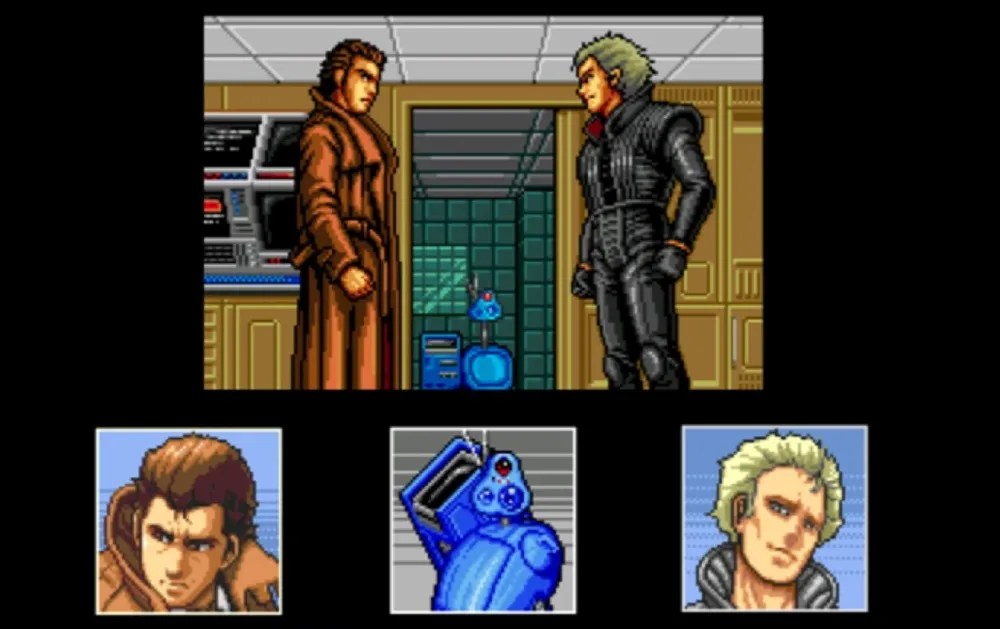
One of Kojima’s earlier titles,Snatcheris a visual novel about a skilled detective who is tasked with hunting down Snatchers — androids who can disguise themselves as humans to blend in with society.
If that sounds familiar, it’s because Kojima was heavilyinspired byBlade RunnerduringSnatcher’sdevelopment. This game has some interesting ties to Kojima Productions’Metal Geargames, perhaps the most obvious one being that the main character’s sidekick is the Metal Gear Mk. II, which would later appear inMetal Gear Solid 4as Old Snake’s robotic companion.
Policenauts
Policenautsstars private eye Jonathan Ingram as he attempts to track down his ex-wife’s killer. LikeSnatcher,it’s a visual novel with heavy cinematic influences that also has many connections to the MetalGearseries.
Eagle-eyed fans ofMetal Gear Solid 1might remember seeing aPolicenautsposter in Otacon’s lab, butPolicenautsalso marks the first appearance of Meryl Silverburgh, who would appear inMetal Gear Solid 1four years later. Unfortunately, the game was never released outside of Japan. However, a popular fan translation exists allowing players to enjoyPolicenautsin English.

The Zone of the Enders Series
Hideo Kojima created this duology of stylish action games starring giant fighting mechs. They’re pretty fast paced games, boasting both ranged and melee combat. EachZone of the Endersgame follows a mech named Jehuty that has a different pilot in each game.
The games were released in the early 2000s, but later received HD remasters for the PS3 and Xbox 360 in 2012. They’re also referenced frequently throughout theMetal Gearseries, most recently with the Hand of Jehuty item from 2015’sMetal Gear Solid 5.

The Boktai Series/Lunar Knights
Boktaiis essentially a solar-powered video game. The game’s various weapons are literally powered by the Sun through a solar-sensor built into the game’s cartridge. This outlandish gameplay mechanic is par for the course when consideringHideo Kojima created the series. While the first two entries saw releases outside of Japan, the third game was only released in Japan. However, the fourth entry still made its way westward, albeit renamed asLunar Knights.
Similar toZone of the Enders,Boktaiis also referenced multiple times in theMetal Gearseries. One notable instance is inMetal Gear Solid 4, where the solar gun fromLunar Knightsappearsas a secret weapon, and its ammo can only be replenished by exposing Snake to in-game sunlight.

TheBaibai Trainer Series
If people were surprised Kojima Productions would makea game about walking, they’ll be awestruck once they discoverBaibai Trainer,which is Kojima Productions’ series of handheld stock market simulators. There’s not a lot of available information about these games, and the series never made its way to the west, but unlikePolicenauts,there hasn’t been quite as high demand for an English translation.
Kojima Productions' past is filled with such a varied assortment of games that it’s hard to say what the studio will do next. However, there is one valuable piece of insight to be gained from the company’s history: Nothing is off the table when it comes to Kojima Productions.

