Summary
Throughout its long and prestigious history, theFinal Fantasyseries has always pushed the needle on what players could expect from video games in terms of storytelling, and its endings have been no different. Whether their players are treated to a happy ending where the world is saved and the villain vanquished, something more ambiguous and bittersweet, or a tearful wrap-up (where the only way to stop crying is to go outside to listen to the birds sing, watch the children play, and a few hours of therapy), each game makes those closing moments feel special.
From pixelated chibis to life-like character models and full voice acting, fans have been cheering, sobbing, laughing, and pulling themselves together aftersome grand last-minute twistssince the very first game in 1987. While a story shouldn’t be judged by its ending alone, these last moments linger the longest. Every ending is beautiful in its own way, but whichFinal Fantasydid it best? Watch out for massive, game-ending spoilers ahead.

After watching Noctis and his friends travel the road for hours, bonding, fighting together, and facing their destinies,Final Fantasy 15could hardly have ended any other way: one final campfire hangout before the breaking of the new dawn. While Eos has been freed froman eternal night plagued by daemons, this happy ending was bought at great cost by a series of poignant sacrifices, culminating in the one made by Noctis as he summoned all the kings of Lucis for a one-way trip to the afterlife.
After finally destroying Ardyn and the Starscourge for good, Noctis himself vanishes, his life’s purpose complete, and his journey finished. Players see Noctis and his comrades' final night by the fire, where he struggles but eventually manages to tell them what their friendship means to him, and a glimpse into the afterlife as Lunafraya, garbed in her wedding dress, sits with Noctis on the throne, crystals glimmering in the air.
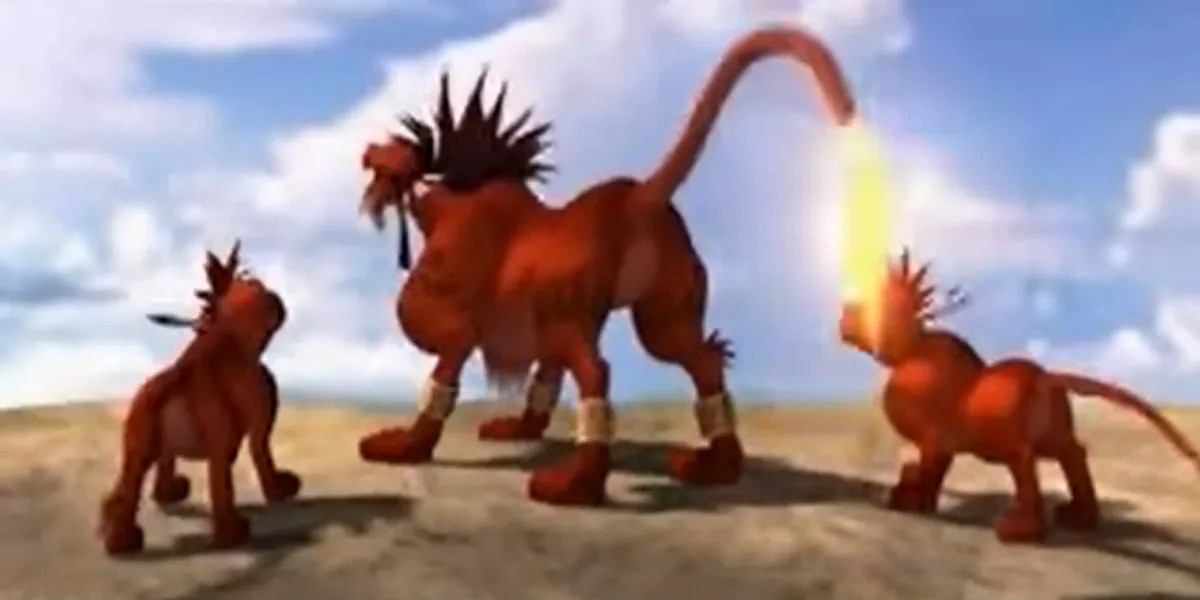
Despite defeating Sephiroth in his physical and Lifestream-infecting spirit-realm forms, Cloud and the party are too late. However, thanks to Aerith’s influence, the Lifestream rises up to throw Sephiroth’s meteor far enough for Holy to destroy it. The party saves the planet, but Midgar and other places are destroyed in the process. Sephiroth’s continuing influence on the Lifestream, while implied to have been purged, is somewhat unclear.
However, fans are treated to a snapshot of Midgar’s ruins 500 years in the future, in which nature seems to have reclaimed the dystopic city from human activity. This ambiguous ending ofFinal Fantasy 7partly led to the fans' clamoring for furthertales in theFF7universe, which Square Enix answered with the movieAdvent Childrenand the PS3 gameDirge of Cerberus. The answer to whether that’s a sign of an effective ending or the game’s overall popularity is equally unclear.

Following Ultimicia’s defeat, Squall is lost in time compression. He suddenly finds himself in the past, in the orphanage where he grew up. Ultimecia reappears, and with her last action, she passes on her powers to Edea, beginning a causal time loop that traps her forever, allowing time to reassert itself. This isn’t the only seamless thread weaved inFinal Fantasy 8’s closing moments. As he is transported away from the past, Squall wanders alone in a lifeless and timeless desert. His memories and identity dissolve, and his worst fears are realized.
But rather than accepting this fate and pushing life away, he calls out to his loved ones, having learned to open his heart. Rinoa appears, dramatically bringing him back from the dead. Meanwhile, players see Squall’s father, Laguna, honoring the grave of Squall’s mother and his late wife, Raine.Final Fantasy 8wraps up all at once the comedic tragedy of afailed-love-story-turned romance(Laguna and Julia, then Laguna and Raine), the full, heartbreaking tragedy of a war-torn family (Ellone and Squall), and finally, the satisfying conclusion to an optimistic love story about growth and acceptance.

Few endings in video games have been as impactful as the one seen inFinal Fantasy 6. While the series had experimented with darker tones in its narratives before, the ending ofFF6broke the floodgates completely. Although the party ultimately defeats Kefka, the mad god of magic, the world below remains completely destroyed and is implied to be unsalvagable. This ending, presented withFinal Fantasy 6’s upbeat and colorful art style, shocked gamers worldwide, especially as the heroes had come so close to making the world right before Kefka snatched victory from them.
Kefka’s final battle is striking and bombastic,thanks to the heavenly boss battle music, but even with Kefka erased from the world from his throne atop the floating continent, the world remains destroyed. Compounding the tragedy, magic, the only power that could perhaps restore it, also disappears. The espers also disappear, with Terra, herself a half-esper, just about holding herself to the world, offering a small glimmer of optimism amid the deeply grave circumstance of the world before the credits roll.

Just asFinal Fantasy 9’s look and setting were a throwback to the earlier titles in the series, its ending also reflects a return to innocence. In the final act, the party roots out Necron, summoned by Kuja’s nihilistic despair, and they manage to bring Kuja back from his existential rage. Although the ending has some sad spots, such as Vivi’s passing due to his short lifespan, the player is treated to a parade of sweetness. King Cid adopts Eiko, Steiner and Beatrix become a couple, and Zidane surprises Queen Garnet during another stageplay production of “I Want To Be Your Canary,” bringing the story full circle.
The ending, while blissfully upbeat, maintains its own worldly logic.The fate of Zidane and the partyis still left open-ended. For example, Zidane is not exactly made king, and while his lowly class and status as a thief may create conflict in the long run, he ultimately steals the heart of the one he loves. Freya, too, is reunited with her lost lover, although his memories still remain lost. While it may not be the most shocking ending, it plays off the cast with panache and grace.

With full voice acting, stunning visual effects, and a streamlined story that wasn’t afraid to touch on philosophy, problems of blind faith, or animate their characters with well-realized romance,passion, and dark tragedy,Final Fantasy 10had it all. While manyFinal Fantasygames can feel very thematically different by the final act,FF10remains consistent all the way through, as it took time to craft the world and internal logic of its setting, and both of these elements ran until the very end credits.
As Sin is defeated, Dream Zanarkand also disappears, and with it, Tidus. The ending vindicates the tinges of tragedy sprinkled throughout the plot, music, and worldbuilding, which is all delivered in a mournful yet brave-faced kind of way. However, Yuna’s last words are hopeful and forward-looking, if only for the people of Spira. For the fans depressed about the bittersweet end, they need only continue the story with the series' first direct sequel.
