There isn’t much known yet about Bioware’s next installment in itsMass Effectseries. After themissed opportunity ofMass Effect: Andromeda, the decisions Bioware makes at this point in the franchise could either see it flourish into the future, or irreparably tarnish its legacy.
No matter the direction, there’s a high chanceMass Effect 5will have a colorful cast of characters. Here’s a few things we’d love to see fromMass Effect 5’s companions.

RELATED:What to Expect from the Mass Effect Trilogy Remaster
Nuanced Loyalty Missions
Loyalty missions were a huge part ofMass Effect 2, and afterthe return of loyaly missions inAndromeda, they’re a safe bet for the franchise’s future. Throughout the series, the player’s squad mates will reach out to them with personal missions relating to their backstory, giving the player the opportunity to improve their relationship with that companion.
Once the player has completed the entire squad’s loyalty missions, some companions like Jack and Miranda or Legion and Tali will even get into arguments, demanding that the player pick between them. This has important bearing on the story; loyal companions are more likely to surviveME2’s suicide missionat the climax of the game.
Mass Effect 5should keep these companion missions – they’re a great way to explorethe map of theMass Effectsolar systemand the cosmic cultures of its various characters. That said, Bioware should aim to make the relationship between loyalty as a mechanic and the game’s story more organic. A soldier like Kaiden Alenko would likely already be more loyal than an outlaw like Jack. Some characters would be even more likely to sacrifice themselves when loyal, depending on their personality.
While the old companion missions had narrative consequences, the relationship between those consequences and the story was relatively arbitrary. Mordin Solus, for example, is more likely to survive the suicide mission if his loyalty mission is completed inME2, and yet, in one of the series’ most difficult choices,Mordin sacrifices himself inME3because of the exact lessons about scientific ethics he learned in hisMass Effect 2loyalty mission.

On top of that, it would be great to see these missions rely less on binaries like the Paragon/Renegade binary set up in the original trilogy. Squad conflicts could only be resolved by players with a very high percentage of either Paragon or Renegade points, penalizing players who had taken a more nuanced approach to their character. The player isn’t really building a relationship with a squad-mate if they are blasting through their mission with their blinders on, exclusively choosing certain dialog options to fill up a stat bar. Yet, while the story still stands up, that’s exactly the mindset previous installments of the series encourage, not only causing players to choose one track but causing players tooverwhelmingly choose the Paragon option.
ThoughAndromedaremoved the old Paragon and Renegade system, its morality system was still disappointingly simple and in need of overhaul. It would be great to seeMass Effect 5players have to think on their feet a bit more when it comes to their companions, judging their actions and making their decisions based on what they know of the character’s personality, not what they know of the game’s mechanics.
More Alien Aliens
Mass Effectisn’t afraid to give fans some pretty interesting aliens to interact with, from the giant hive-mind Thorian in the first game to the synthetic Reapers of the original trilogy. That’s all well and good for villains, but when it comes to companions, the formula is less adventurous – two legs, 1 to 3 meters tall, eyes, mouths, and a culture based closely enough on a real-world counterpart as to make it easily digestible for players, whether it be the Roman inspired Turians or the Romani inspired Quarians. Of course, this hasn’t stopped some players from ranking their favorites.
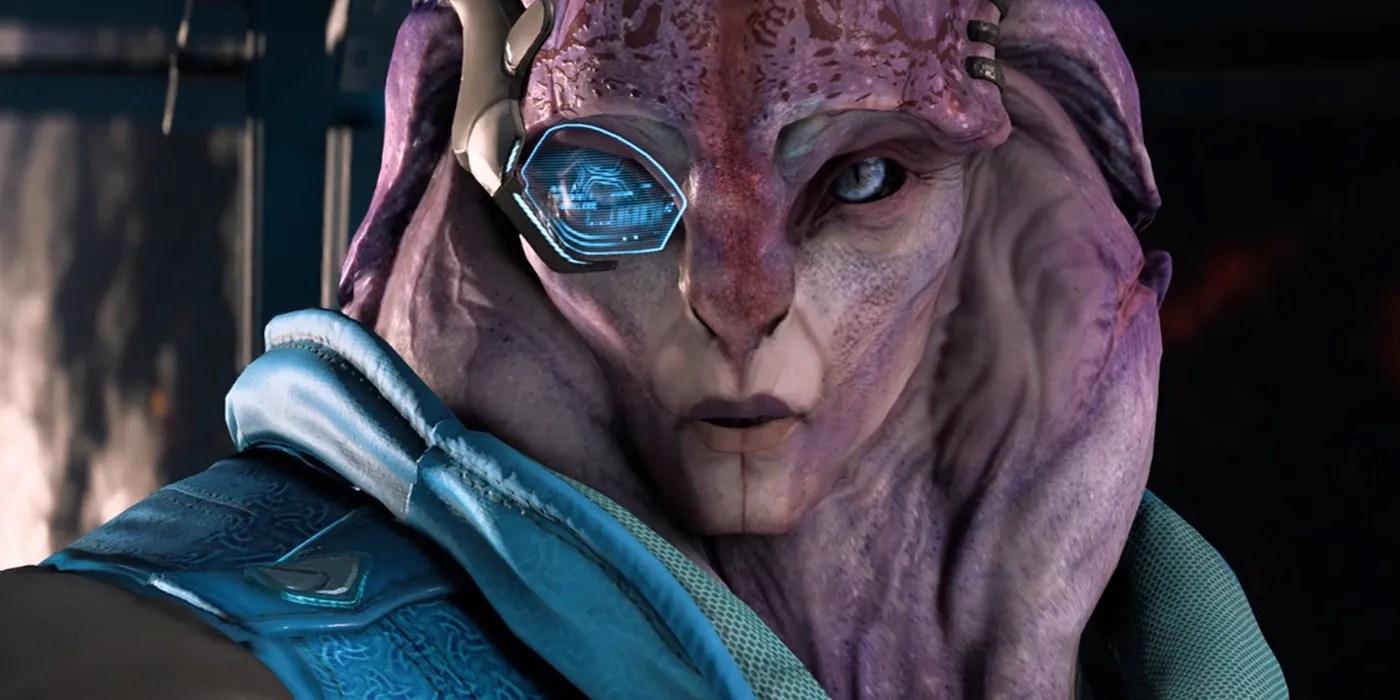
Aliens in science fiction can be used to stress-test the limits of human empathy, asking player to imagine forms of life completely different, and to encourage players to nonetheless find common humanity. Legion, the Geth fromME2was a great start, but it would be nice to see the franchise explore this further. A companion fromthe less powerfulMEalien raceslike the bioluminescent jelly fish-esque Hanar or the insectoid Rachni would be great, if albeit unliekly, to see.
It’s certainly a big challenge. But this is the developer behind theMass Effectromances, arguably some of the best romances in modern gaming, and pushing that further is exactly the direction the franchise should go in to stay feeling fresh and adventurous during its fifth outing. It might make romance a little tricky, but considering the fact that previous games let the player make out with Garrus Vakarian, an alien with no lips, the team is sure to find a way to make it work.
RELATED:Mass Effect 5 Needs to Take This One Feature From Dragon Age
Organic Romance
The romances inMass Effectrange from tender to rough todownright awkward, likeME2’s Thane Romance. Across the board, however, they tend to be pretty self-contained. Although engaging, and part of what sprung the original game to fame, they operate more as a series of optional side missions than a relationship which is thread throughout the game’s overall narrative. The player can bring Garrus along on a mission where they mow down people left and right, and he’ll still think of Shepherd as the check on his hot temper as long as they have encouraged him to spare an old enemy in his loyalty mission.
Andromedamade the universe ofMass Effectfeel almost infinitely vast, if not open-world, but as long as the romance plot-lines are treated like side quests and are kept on the ship or in the Citadel, that world and the most important relationships in it will never feel truly dynamic. In the games so far, most romance can be boiled down to a few extra interactions and one passionate night before the final mission. It doesn’t quite feel integrated. Other characters should have opinions on the player’s relationships. The arc of their relationship with a companion should affect the decisions that companion makes, and the choices they come to approve or disapprove of. If the player is on a mission and chooses to bring their partner, they should expect unique consequences.
In short, the key relationships the player builds should have ripples which are felt in all corners of the narrative, otherwise Bioware risks having an epic space story set against all new set pieces, and a separate emotional plot-line happening somewhere else entirely. In the original trilogy, this separation meant that no matter what, Shepherd’s romance always ended in tragedy – they never returns from their final mission, and one of the series' key emotional threads feels left to dangle. Not evenME3’s new DLC endingscould satisfy that itch. Hopefully inMass Effect 5,Bioware can find a way to integrate its companion relationships, romantic and otherwise, into the overarching narrative in a more satisfying way.
Mass Effect 5is in development.
MORE:Mass Effect 5’s Best Bet is to Follow Mass Effect 2’s Lead
